
Should I Be Eating Rice After Bariatric Surgery?
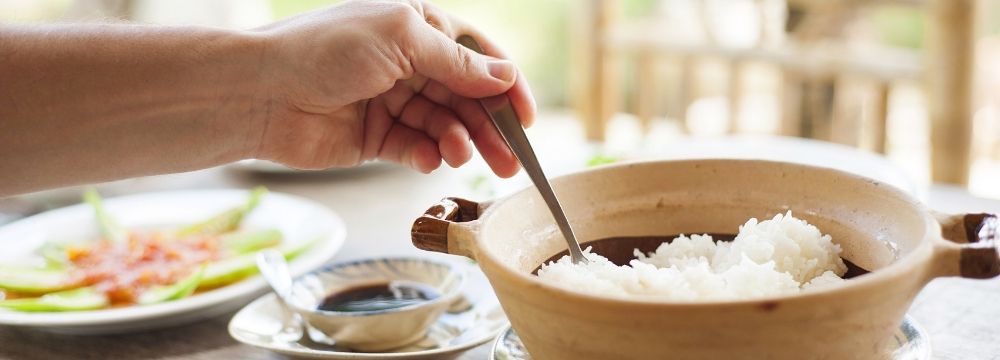
Watching what you eat is a major aspect of bariatric success. With less gastric real estate to hold food in, you have to make the calories and nutrients you consume count.
Rice is often discouraged due to its not-so-nutrient-dense nature and the space it takes up in the smaller gastric pouch after surgery. But can you still eat it? It depends on how you pick it, cook it, portion it, and pair it.
Health Profiles of Different Rice Varieties
Rice includes a whole family of grains, each with its own texture, flavor, and nutrient profile. It can be categorized by grain length (short, medium, or long) and whether it’s whole or refined. It comes in a variety of colors like white, brown, black, red, and even gold. Each type packs different nutrients and health benefits, and those variations can help you make choices that fit your post-bariatric diet.
White rice is the most widely consumed. It’s refined, meaning the bran (the fiber-rich outer layer) and germ (the embryo that can sprout into a new plant) have been removed, leaving the starchy endosperm (the core). Milling (removing the bran and germ) softens the texture and flavor but removes most of the naturally occurring fiber, vitamins, minerals, and antioxidants. It’s easy to digest and usually enriched with B vitamins and iron to replace lost nutrients, but it’s high in carbohydrates and has a higher glycemic index compared with whole-grain rice (e.g., it raises blood sugar more quickly).1
Brown rice is a whole grain, which means the bran and germ are intact. It has a chewier texture, a nuttier flavor, and a richer nutrient profile because it retains the fiber, magnesium, B vitamins, and other micronutrients that are stripped from white rice. Brown rice has a lower glycemic index to regulate blood sugar better – a more stable option for weight management and metabolic health. The higher fiber slows digestion, which can help you feel full longer.
Red rice is rich in anthocyanins, the antioxidants that give it a reddish color. Anthocyanins are primarily absorbed and metabolized in the lower intestine, where the GI microbiome breaks them down into a form the body can utilize. These compounds are thought to help reduce oxidative stress, which is linked to cardiovascular disease and neurodegenerative conditions. It’s also possible that they perpetuate the health of the GI tract by supporting an appropriate balance of intestinal bacteria.2
Black rice, also referred to as “forbidden rice,” is even higher in anthocyanins, which are responsible for the deep purple-black color. It’s also high in fiber, iron, and protein compared with white rice. A quick piece of history to chew on: the rarity, low yield, and perceived medicinal properties of black rice in ancient China cemented its status, with severe penalties for anyone other than royalty caught possessing it, making it truly “forbidden.”
Jasmine and Basmati rice are long-grain varieties prized for their aroma. Jasmine rice is soft, aromatic, and widely used in Thai cuisine. Basmati rice is drier and fluffier, and commonly served in Indian and Middle Eastern dishes. Brown versions of both retain more fiber and micronutrients than the white varieties, though their carbohydrate content is similar. Basmati rice has a moderate glycemic index, while jasmine rice tends to be higher.3
Wild rice is technically the seed of an aquatic grass rather than a true rice, but it still boasts high protein and fiber. In preliminary studies, it’s been associated with improved cholesterol and lipid profiles.3 It’s also full of antioxidants, vitamins, and minerals such as magnesium, phosphorus, and B6.
Golden Rice is a genetically modified (GM) rice engineered to produce beta-carotene, a precursor to Vitamin A, which gives it its golden color. Over several decades, it was bred to alleviate vitamin A deficiencies in impoverished areas of the world. As a biofortified crop, it has garnered some controversy, though several countries, including the United States, have deemed it “as safe as ordinary white rice.”4
Getting Your Rice Fix
Rice is delicious, pairs well with just about anything from dessert to dinner, and yes, you can still eat it after surgery. But not in buffet portions.
Whole-grain and colored rice varieties generally tend to provide more fiber, protein, micronutrients, and antioxidants than refined white rice. For post-op bariatric diets, this is a no-brainer: lay off the white rice. Even with innovative cooking methods to cut calories, white rice has to take a back seat. (And yes, there is research on a cooking method to reduce the calories in rice!)
But just because varieties with color provide more nutrients, you still have to think in terms of ratios. Rice is calorie-dense relative to its volume in the stomach, and prioritizing carbohydrate-rich foods (like rice) crowds out nutrients. Whether your procedure was malabsorptive or restrictive, that’s not a good setup for weight loss success; digestion is altered in such a way that nutrient deficiencies are a concern after bariatric surgery.
No matter what, protein has to be the anchor of the meal. A half cup of cooked rice fits easily on a plate, but in a bariatric pouch, it can displace protein rapidly without providing the same satiety or metabolic benefit. If rice is competing with protein for space, protein wins every time. And non-starchy vegetables (like spinach, peppers, tomatoes, cucumbers, mushrooms, and green beans) tie with low-sugar fruits (like berries, melons, and citrus) for second place.
Nutritional demands and portion size will change over time as the body adapts to the surgery, weight loss progresses, and eating patterns evolve. How you tolerate foods will also evolve, including your metabolic response to different varieties of rice and what you pair it with. Even well-chosen foods can fall short in closing nutrient gaps, particularly after malabsorptive procedures.
Regular follow-up visits allow your care team to monitor weight trends, lab values, and any unusual symptoms, should they arise. Periodic blood work helps ensure you’re meeting requirements for protein, iron, B vitamins, calcium, vitamin D, and other key nutrients that support energy levels, bone health, and metabolic function.
At Advanced Bariatric and Surgical Specialists, your care doesn’t end after surgery. From your first info session to follow-up, we’re all about sustainable success, nutritional adequacy, and improved quality of life. If you have questions about your diet, food tolerance, or long-term bariatric nutrition, reach out to the ABSS team.
- Rice. (2024, November 25). The Nutrition Source; Harvard T.H. Chan School of Public Health. https://nutritionsource.hsph.harvard.edu/food-features/rice/.
- Mattioli, R., Francioso, A., Mosca, L., & Silva, P. (2020). Anthocyanins: A Comprehensive Review of Their Chemical Properties and Health Effects on Cardiovascular and Neurodegenerative Diseases. Molecules (Basel, Switzerland), 25(17), 3809. https://doi.org/10.3390/molecules25173809.
- Wasan, P., Kumar, S., Saini, N., Bhatt, S. S., Bhatt, A., & Ballabh, J. (2022). Review on Nutritional Content of Various Types of Rice. Asian Journal of Food Research and Nutrition, 1(1), 1–10. https://www.researchgate.net/publication/362090371_Review_on_Nutritional_Content_of_Various_Types_of_Rice.
- Ungvarsky, J. (2025). Golden rice. EBSCO Information Services, Inc. https://www.ebsco.com/research-starters/health-and-medicine/golden-rice.
Categories
Archives

Get Started
Register today for benefits!


Success Stories
See our patient testimonials.

Patient Portal
Access to your medical records.